September 12, 2026
MRP and Expiry Date Printing Rules in India: What Must Appear on the Pack
Which declarations a packaged commodity has to carry in India, how MRP and the dates must be written, and why printing them at the point of packing beats pre-printing them.
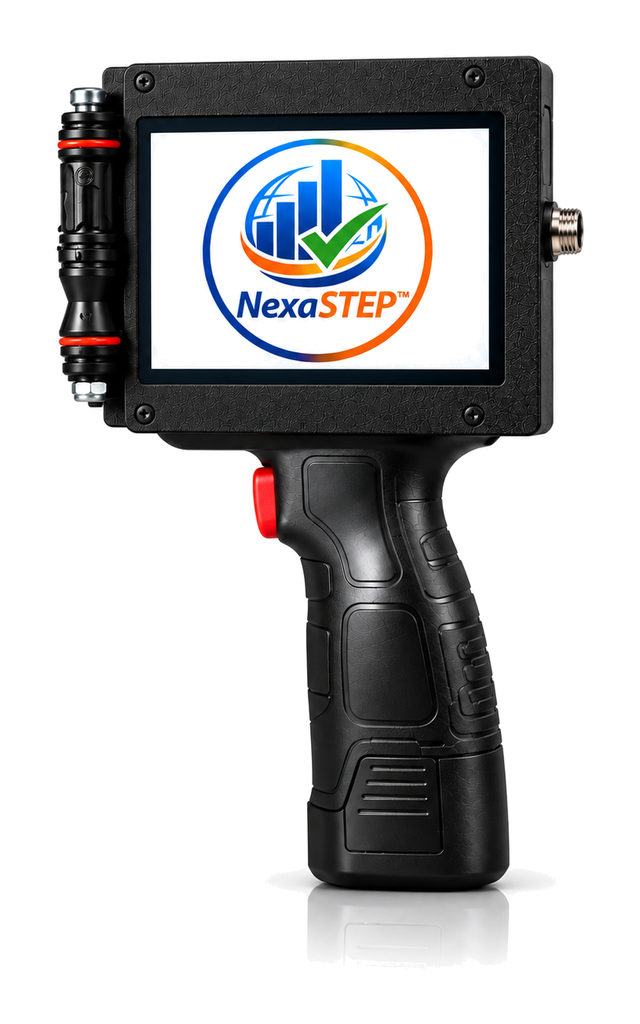
Almost every packaged product sold to a consumer in India has to declare a few things on the pack itself: what it costs, which batch it came from, and for anything perishable, when it was made and when it stops being good. This guide sets out what those declarations are, how they have to appear, and why the machine that puts them there is usually brought in at the packing table rather than the printing press.
This is orientation, not legal advice
Requirements differ by product category, by pack type and by whether you are selling retail, wholesale or for export, and they are amended from time to time. Confirm what applies to your product with your own compliance advisor before you commit artwork or a process.
What this guide covers
Which rules apply to your pack
Three regimes overlap, and most packers are subject to at least two of them. They stack rather than replace each other, so satisfying one does not excuse the others.
- Legal Metrology. The Packaged Commodities Rules govern the general declarations on a pre-packaged commodity — retail sale price, quantity, the identity of the packer, and a batch or lot identifier.
- Category rules. Food is additionally subject to FSSAI labelling and date-marking requirements. Pharmaceutical and cosmetic products carry their own regimes with their own date conventions.
- Customer requirements. Organised retail buyers and export customers frequently specify formats, code placement or a scannable code beyond anything the law asks for. These are contractual rather than statutory, but they reject stock just as effectively.
The declarations themselves
Some of these belong on the printed artwork, because they never change. The ones that change from run to run are the ones you code onto the pack as you fill it.
| Declaration | Changes per run? | Usually applied by |
|---|---|---|
| Name and address of packer | No | Pre-printed artwork |
| Net quantity | No | Pre-printed artwork |
| Retail sale price (MRP) | Sometimes | Coded at packing |
| Batch or lot number | Every run | Coded at packing |
| Manufacturing date | Every run | Coded at packing |
| Expiry or best before | Every run | Coded at packing |
The bottom four rows are the reason batch coding machines exist. They are the declarations that cannot be committed to artwork, because they are not known until the product is made.
How MRP has to be written
The retail sale price is declared as a maximum, inclusive of all taxes, and it is conventionally written in the form that makes the inclusive nature explicit — for example MRP ₹499.00 (incl. of all taxes). The wording and rounding conventions matter, because a price that appears to exclude tax invites exactly the dispute the rule exists to prevent.
In practice MRP is the declaration most likely to change without the artwork changing: a price revision on the same carton stock is an ordinary event. That is an argument for coding it rather than pre-printing it, because pre-printed price means obsolete stock every time the price moves.
Manufacturing, expiry and best before
Three different statements, frequently confused, and the difference is not cosmetic.
- Manufacturing date — when it was made or packed. On many non-perishable goods this is the only date required.
- Best before — a quality statement. The product is expected to retain its stated characteristics until then, and is not automatically unsafe afterwards.
- Expiry or use by — a safety limit. After it, the product should not be sold or consumed.
Which one your pack carries is set by your category, and the format is worth fixing deliberately rather than leaving to whoever sets up the machine that morning. A coder that holds a date field and rolls it forward automatically, and computes the expiry as an offset from the manufacturing date, removes the most common source of error here: someone retyping a date and getting the year wrong on a whole batch.
Legible, and not easily removed
A declaration that cannot be read is treated as one that is not there. In the field, illegibility almost always traces back to ink chemistry rather than to the machine: water-based ink on a non-porous surface has nothing to soak into, so it beads, smears and never sets. Carton and uncoated board take water-based ink; plastic, foil, glass and metal need a solvent-based, fast-dry cartridge.
The five-second test
Print onto a scrap of the real material, wait five seconds, then rub it with a fingertip. If it moves, you are on the wrong ink for that surface. Do this before you code the batch, not after.
Why you print it during packing
Pre-printing the variable data means deciding a batch number, a manufacturing date and a price before the product exists. Every delay, every recipe change and every price revision then turns printed stock into scrap. Coding at the point of packing keeps the pack blank until it is filled, which is why it is the standard arrangement for anything carrying a shelf life.
It also means one stock of cartons serves every run, which is usually a larger saving than the coder costs.
Where to go next
For the machine that puts these declarations on the pack, see our handheld batch coding machines, listed with live prices. To work out what one will cost you to run, read batch coding machine price in India. For which ink your particular surface needs, see surfaces and ink.
Not sure which declarations apply to your product, or which ink your pack needs? Tell us what you are packing and we will tell you straight. Talk to us.
Frequently asked questions
- Is printing MRP on the pack legally required in India?
- For most pre-packaged commodities sold to consumers in India, yes. The Legal Metrology Packaged Commodities Rules require a declared retail sale price, inclusive of all taxes, on the pack itself. The precise set of declarations depends on your product category and on whether the pack is retail or wholesale, so confirm what applies to yours before you finalise artwork.
- Do I have to print the manufacturing date and expiry date?
- For perishable and category-regulated goods, yes. Food carries date marking under FSSAI rules and pharmaceutical products under their own regime, and both are additional to the Legal Metrology declarations rather than instead of them. Non-perishable goods may need a manufacturing or import date without an expiry. Which of the three applies is decided by what you sell.
- Can I write MRP and expiry by hand or with a sticker?
- The requirement is that the declaration is present, legible and not easily removed. A hand-written date on a retail pack is a common finding in inspections because legibility and permanence are both hard to defend, and a sticker can be peeled. Printing directly onto the pack avoids both arguments, which is the practical reason most packers code rather than write.
- What is the difference between expiry date and best before?
- Best before is a quality statement: the product is expected to keep its stated characteristics until that date and is not unsafe immediately after. An expiry or use-by date is a safety limit, after which the product should not be sold or consumed. Which one your pack carries is set by the rules for your category, not by preference.
- Does the batch number have to be printed too?
- A batch or lot identifier is required on most packaged commodities, and it is the declaration that matters most if something goes wrong. It is what makes a recall a recall of one batch rather than of everything you have ever shipped, so it is worth treating as a traceability tool rather than as a compliance box.
- What happens if the code smudges or fades before it reaches the shelf?
- An illegible declaration is treated as an absent one, and it usually means ink that never set on the surface. Water-based ink on plastic, foil or glass will not dry because nothing absorbs it. Matching ink chemistry to substrate is a compliance question as much as a print-quality one.
- Should the date be printed before or during packing?
- During. Pre-printing commits you to a date before the product exists, so a delayed run, a changed recipe or a revised price turns printed stock into scrap. Coding at the point of packing keeps the pack blank until it is filled, which is why it is the normal arrangement for anything with a shelf life.
- What machine prints MRP and expiry onto packs?
- For most small and medium packers, a handheld thermal inkjet coder. You compose the message once on the machine, including date fields that roll forward automatically and a batch counter, then draw it across each pack. It needs no conveyor, which is what makes it practical for a packing table rather than a production line.